If you're a regular browser of any social media relating to PC hardware, you'll almost certainly come across a weekly occurrence, or three, of an Nvidia GeForce RTX with a melted 12VHPWR connector. Even though the design has been updated to help mitigate the problem, it's still an issue for some people. However, reckons it has the perfect solution, and in a demonstration video, it handles over 1,300 W of
power without getting anywhere near the melting point.
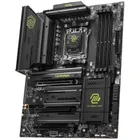
The is hosted by Tony Yu, aka Old Uncle Tony, the general manager of Asus' China division (via ). Last year, to play around with, and I came away seriously impressed with the whole idea of it. BTF or 'Back to the Future', is a design where all of the spikey connectors and cables on a motherboard are mounted on the back, giving the whole look a much cleaner affair.


On top of that, BTF graphics cards eschew standard power cables, including the troublesome 12VHPWR system, by using a small slot that looks a bit like a tiny PCIe connector. The latest that lets you switch between a normal power connector and the Asus slot.
To show just how sturdy it all is, Yu starts by setting the current flow through the BTF connector on a dummy PCB so that the setup draws over 650 W of power, pretty much the maximum most GeForce cards will ever pull. Now, my Chinese is unfortunately very limited, but not so for our chums over at Tom's Hardware, who write that the connector reaches a maximum temperature of 35 °C.
Then Yu really cranked up the current, so that a little over 1,300 W was being drawn, and the connector stayed under 40 °C. Not content with that, buttons were pressed, dials were twiddled, and the power consumption ramped to 1,900 W. The result? A connector temperature of just over 40 °C. So yeah, sturdy.

That said, it's worth remembering that one still has to use a 12VHPWR cable, or multiple 8-pin PCIe cables, between the BTF motherboard โปรโมชั่นสล็อต and the power supply unit. The Asus power slot is actually wired to a 12VHPWR socket on the rear of the board, so it's not like the design fully bypasses Nvidia's troublesome connector.
In the maximum power test, the U31 com cables between the PSU (well, two PSUs in this instance) and the motherboard reached 70 °C, which is alarmingly high, but the purpose of the whole demonstration was to show that everything is fine under normal conditions.
Interestingly, it also shows that the 12VHPWR doesn't default to instant thermonuclear meltdown at 600 W, or higher for that matter, because the one on the rear of the BTF motherboard seems to cope just fine.
I honestly think Asus' BTF tech is the future of desktop PC layouts, especially when it comes to supplying power to graphics cards. Unfortunately, few other vendors are exploring this stuff——and while the dongle in BTF 2.5 gets around the problem of using a BTF graphics card in a non-BTF motherboard, it's an extra complication and cost that PC gamers may not wish to pay for.
But if you do make the jump and you use a good quality PCIe 5.1 power supply, ensuring that its 12VHPWR cable is firmly plugged into the supply and BTF motherboard, you should be able to wave goodbye to any RTX meltgate fears.
👉👈
1. Best AMD X870:
2. Best AMD X670:
3. Best AMD B850:
4. Best AMD B650:
5. Best AMD B550:
6. h25 com สล็อต Best Intel Z890:
7. Best Intel Z790:
8. Best Intel B760:
CoinHunter643
Some games are a bit laggy on my phone at times, but the variety of games and the smooth desktop experience make up for it. Overall, the website offers a great gaming experience for both casual and serious players.