These days, it seems like there's a new tech startup company appearing every day, promising to revolutionise whatever market it's targeting. Oxmiq Labs Incorporated is a name that few will have heard of right now, but its founder is practically a household name in the world of processors, and Raja Koduri's latest venture is making some big claims.
Admittedly, those claims are so packed full of tech buzzwords that I had to reread them all a dozen times to get any sense of what makes Oxmiq Labs different from any other chip startup.

At the heart is the OxCore, of which almost nothing is said, other than it's based on the RISC-V ("risk-five") architecture and that it "integrates scalar, vector, and tensor compute engines in a modular architecture customizable for specific workloads, enabling nano-agents, native Python acceleration, and compatibility with SIMD/CUDA paradigms."
These cores are designed to be stacked on top of a slice of relatively slow but spacious DRAM or relatively fast but small SRAM, with the resulting chiplets labelled as MCBs and CCBs in the diagram. What do the letters stand for, you might ask? That's not explained, but I'd guess they're something along the lines of memory/cache core something. Bonds, badgers, burgers, boffins—not a clue.
Anyway, each MCB/CCB is a complete SoC (system-on-chip), with interconnect bridges to allow them to be hooked up to other chiplets. Oxmiq's diagram shows two such examples: a MCB-heavy variant for doing AI inference and MCB/CCB-balanced version for AI training.
Despite the press statement mentioning "next-generation graphics", this product absolutely is not for gaming PCs, sadly—it's for massive data centers, to process AI or scientific data.

To compete against AMD, Intel, and Nvidia, any hardware startup needs to have a comprehensive and powerful software stack, and to that end, Oxmiq has developed OXPython. This "enables Python-based Nvidia CUDA AI applications to execute seamlessly on non-NVIDIA hardware without code modification or recompilation." I'm not sure Nvidia would be best pleased about this, but another famous tech person startup certainly is: Jim Keller.
His Tenstorrent company—which also makes RISC-V processors for AI—has teamed up with Oxmiq: "We’re excited to partner with Oxmiq. OXPython’s ability to bring Python workloads for CUDA to AI platforms like Wormhole and Blackhole is great for developer portability and ecosystem expansion. It aligns with our goal of letting developers open and own their entire AI stack."
Keller and Koduri both have very long careers in the semiconductor industry, with Keller spending many years at AMD, leading the development of the Athlon K8 and Ryzen Zen architectures. Koduri also spent a long time at AMD, working in its graphics division, leading the development of Polaris, Vega (below), and Navi. He also spent time with Intel, with the Arc series of GPUs coming under his leadership.

In short, both know what they're doing, and their names will certainly help in no small way ทางเข้า winner55 ผ่านโทรศัพท์ มือ ถือ with attracting investors. Tenstorrent does have one advantage over Oxmiq, though. It already has hardware available to buy, whereas Koduri's startup appears to be focused on IP only, i.e. it'll be down to another company to license the tech and make the chips themselves. That's more cost-effective than having to purchase fabrication slots at the likes of TSMC, but as Arm will testify, processor IP licensing isn't necessarily an easy path to big bucks.
MediaTek has already invested in Oxmiq, though how much of the $20 million in seed funding it contributed to is unknown. Koduri's company claims to have already generated revenue from its software (Tenstorrent will certainly be responsible for some of this) and that area might ultimately be its winner55 ทางเข้า สล็อต biggest earner.
The G in GPU might stand for graphics, but the money just doesn't lie in gaming anymore (and hasn't for a good few years). Calling them AIPUs might seem like a silly idea, but at least it would stop anyone from unrealistically hoping that Nvidia's near-monopoly of the gaming GPU industry was under threat from a potent startup. The possibility of Oxmiq's 'rearchitected GPUs' prising AI revenue away from Team Green might be a little more believable, though.
👉Check out our list of guides👈
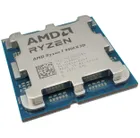
1. Best CPU: AMD Ryzen 7 9800X3D
2. Best motherboard: MSI MAG X870 Tomahawk WiFi
3. Best RAM: G.Skill Trident Z5 RGB 32 GB DDR5-7200
4. Best SSD: WD_Black SN7100
5. Best graphics card: AMD Radeon RX 9070
JackpotHero3575
Customer support has been outstanding whenever I had any issues. They respond quickly and professionally, ensuring that any concerns with deposits, withdrawals, or gameplay are addressed immediately, which makes me trust the platform more. I appreciate the themed slot games, especially those based on movies and TV shows. They make the gaming experience more engaging and immersive. The combination of storyline, visuals, and bonus features makes each game feel unique. The promotions and bonuses offered are very generous. I especially love the daily free spins and deposit bonuses. They make playing even more enjoyable and increase my chances of winning big. The platform keeps me engaged for hours every day.